
The short version
What to know
- A credible provider names the exact modality and its limits.
- Screening, sanitation, training, and stop procedures should be specific.
- Guarantees and borrowed evidence are warning signs.
“Best” should mean transparent and appropriate
There is no universal best provider for every person or goal. A better question is whether a provider is transparent about its equipment, scope, training, safety procedures, evidence, costs, and limitations—and whether the service is appropriate for you.
1. Ask for the exact modality and device
The provider should be able to name the system, explain whether it uses contact, air, gas, or another method, and describe how exposure is controlled. If the marketing cites research, ask whether the research used that device and protocol. Comparative studies show that cooling methods can create different temperature responses.1
2. Evaluate the safety process
Look for a health-history screen, skin check when relevant, clear contraindications, informed consent, continuous monitoring, an immediate stop option, and documented response procedures. Cold-related nerve and skin injury is possible when exposure is excessive or misapplied.2 People with impaired circulation or sensation may need medical guidance before cold-device use.3
3. Verify training without confusing it with licensure
Ask what training the operator completed, who provided it, whether it is current, and what it covers. A manufacturer certificate is not the same as a medical license. The provider should describe its scope accurately and refer medical questions, diagnosis, and concerning symptoms to licensed clinicians.
4. Inspect sanitation and privacy
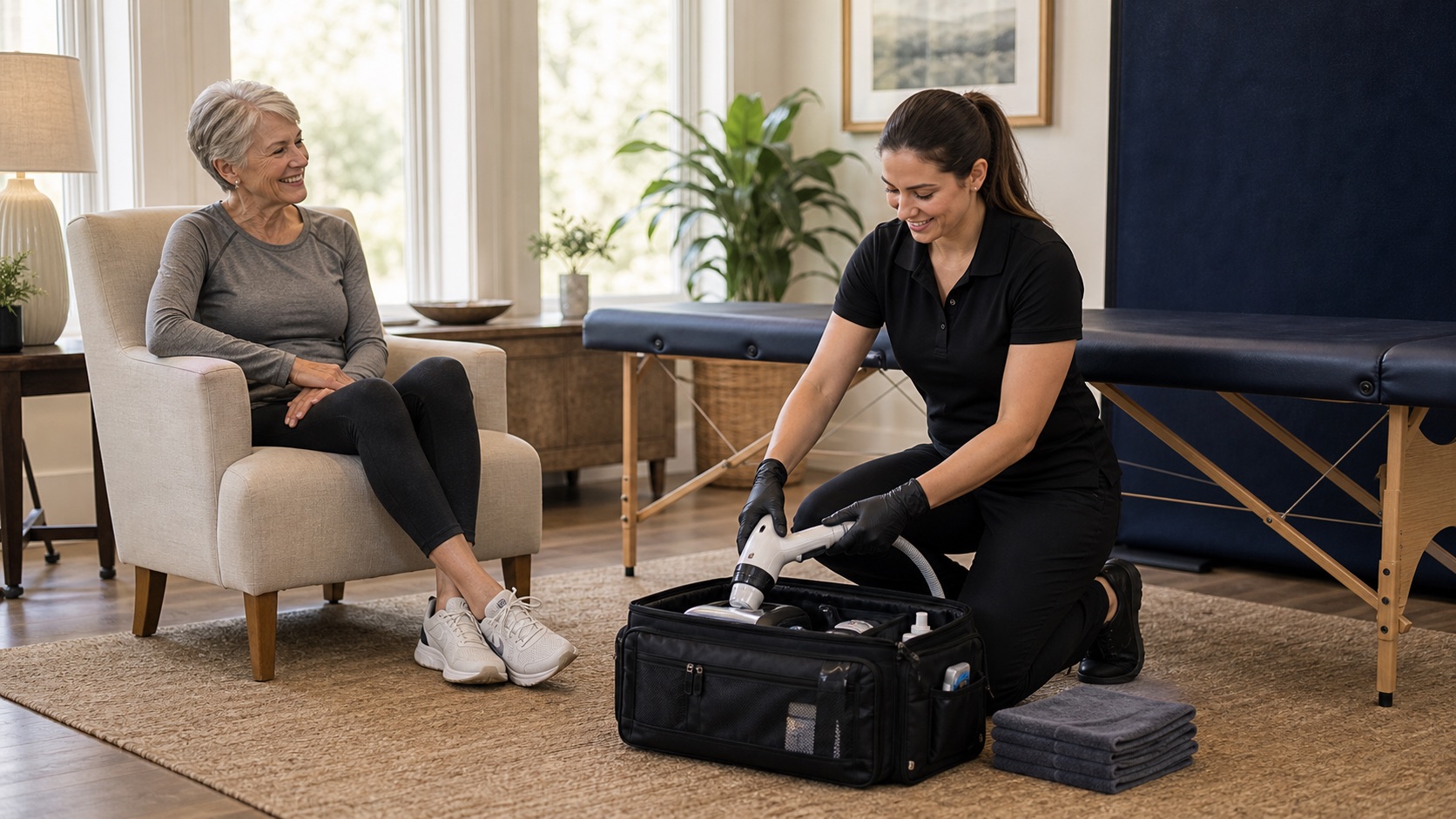
For mobile visits, ask how equipment and contact surfaces are cleaned between clients, how clean and used items are separated, what space or power is required, and how private health information is handled in homes, hotels, gyms, or events.
5. Pressure-test the claims
Health claims should match competent and reliable scientific evidence. The FTC warns that the overall message matters: testimonials, images, and before/after presentations can imply typical or objective results even when fine print is present.4 Be cautious with guarantees, cure language, dramatic systemic claims, or studies from a different modality.
6. Understand price, cancellation, and follow-up
Confirm the full cost, deposits, travel charges, session length, cancellation terms, package expiration, and how concerns are handled afterward. A professional provider should be comfortable giving you time to decide.
Ask the provider to explain the equipment, training, contraindications, sanitation practices, and emergency process in clear terms.
Sources & context
Where this guide comes from
- Costello et al. (2012), temperature responses to whole-body cryotherapy and cold-water immersion (opens in a new tab)Source 1
- Malone et al. (1992), cryotherapy-related peripheral nerve injury case series (opens in a new tab)Source 2
- FDA, avoiding injury with circulating hot/cold therapy devices (opens in a new tab)Source 3
- FTC Health Products Compliance Guidance (opens in a new tab)Source 4
The cited research may involve different cooling methods, populations, and protocols. The surrounding text explains what each source can—and cannot—support.