The short version
Why localized cryotherapy gets attention
- It focuses cold on a selected area instead of putting your whole body in a chamber.
- Cooling can temporarily change nerve signaling, pain sensitivity and how a sore area feels.
- Recovery research is encouraging for short-term soreness, but the exact method and goal matter.
- Mobile Cryo Pro brings the equipment to your home, workplace, gym or other suitable private location.
What makes localized cryotherapy different
Cryotherapy simply means the therapeutic use of cold. It can describe an ice pack, cold-water immersion, a circulating cooling sleeve, localized cold air or vapor, or a whole-body chamber. Those options do not deliver the same dose or cool the same amount of tissue.
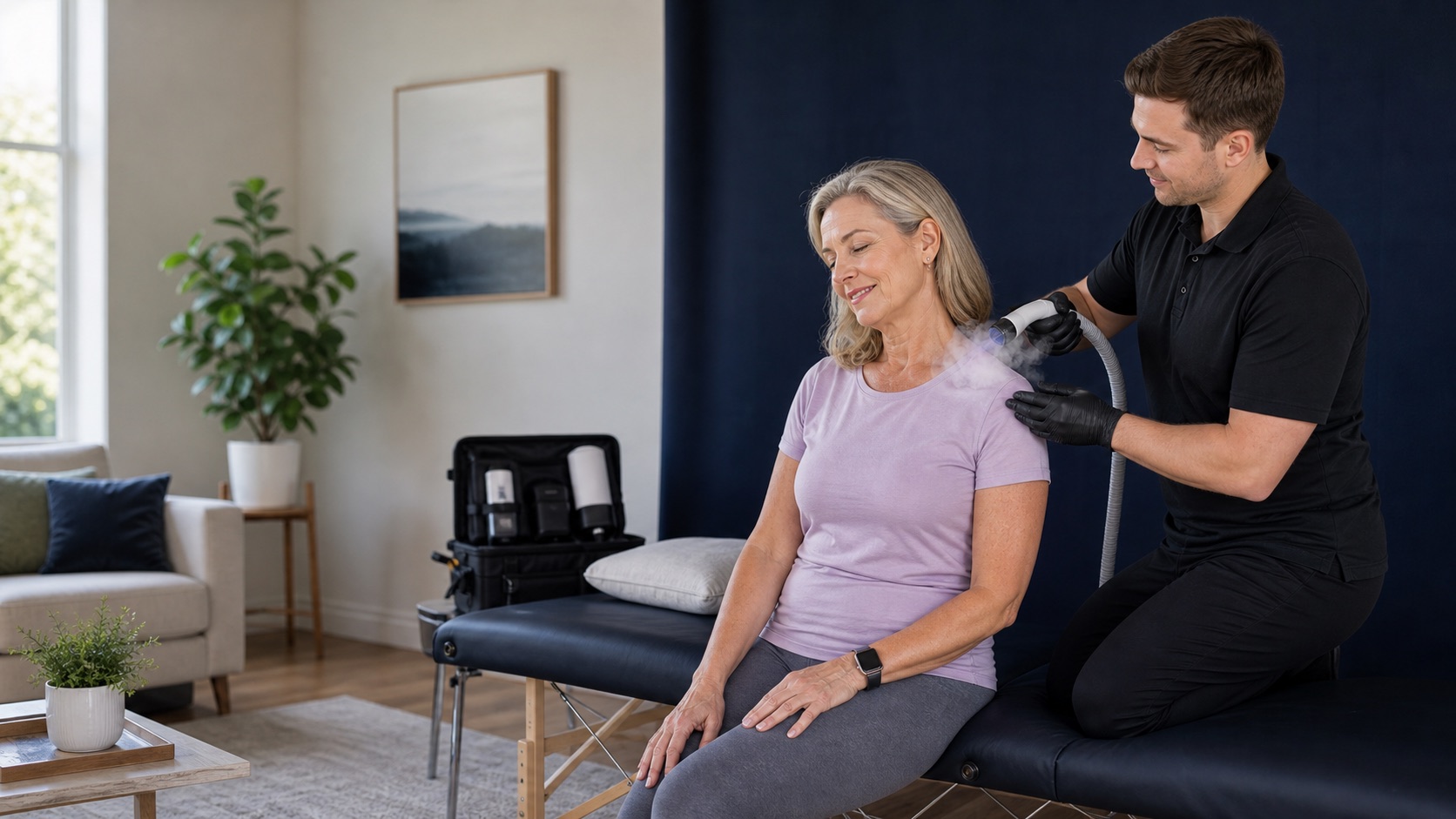
Localized cryotherapy is the targeted option. The provider works on a selected muscle, joint or body area while the rest of you stays at room temperature. Mobile Cryo Pro does not use a whole-body chamber.
| Approach | Area exposed | Typical setup | Best evidence match |
|---|---|---|---|
| Localized cryotherapy | One selected area | Provider-directed equipment | Research using a comparable local device and protocol |
| Ice or cooling wrap | One selected area | Direct contact or circulating pad | Research using the same temperature, duration and body area |
| Whole-body cryotherapy | Most of the body | Walk-in chamber | Whole-body studies—not automatically localized treatment |
The practical advantage is focus: you can discuss one area, choose a service around that goal and avoid a full-body cold exposure. The scientific advantage is not automatic. Results from ice, immersion or chambers should only be applied to a localized service when the method and outcome are genuinely comparable.
What cold changes in the body
Once tissue begins to cool, several short-term responses can follow. Local blood vessels narrow, nerve signals may travel more slowly and pain sensitivity can change. In a controlled ankle-cooling study, researchers measured slower nerve conduction together with higher pain threshold and tolerance.1 Studies using localized cooling devices have also measured meaningful reductions in skin blood flow during and after exposure.2
Those effects help explain why cold can make a sore area feel different for a while. They do not prove that a tendon repairs faster, arthritis is treated or an injury has resolved.
Temporary comfort can still be useful. The honest goal is to use that window well—as one part of recovery, movement or rehabilitation—not turn it into a miracle claim.
Why people consider localized cryotherapy
People usually are not looking for a lecture on thermoreceptors. They want to know whether a focused cold session could make the next part of their day, training week or recovery plan feel more manageable.
- Post-workout sorenessA targeted session may appeal when one area feels especially worked after training or competition.
- A demanding scheduleA mobile visit removes another trip across town and can fit into a home, gym, workplace or team setting.
- A focused recovery routineLocalized treatment lets the conversation stay on the area you actually want to address.
- Curiosity without the chamberSome people want to explore cold therapy without whole-body exposure.
Localized cryotherapy is best viewed as a recovery and comfort service. It does not replace medical evaluation, physical therapy, sleep, nutrition, progressive training or an appropriate rehabilitation plan.
What the research supports
The strongest, clearest findings are the short-term physiological ones: tissue cools, local blood flow changes and nerve conduction can slow. Evidence about real-world outcomes is more mixed because studies use different devices, temperatures, exposure times and populations.
A 2026 network meta-analysis found that local cold therapy reduced delayed-onset muscle soreness at 48 hours in the studies it pooled.3 That is encouraging for recovery, but it is not proof that every localized device produces the same result. An earlier Cochrane review found very low-quality, insufficient evidence for whole-body cryotherapy after exercise—an important reminder that “cryotherapy” is not one uniform intervention.4
- A temporary change in sensation or comfort
- A focused addition to a broader recovery routine
- Possible short-term help with perceived post-exercise soreness
- Guaranteed or permanent pain relief
- Faster healing of a diagnosed injury
- Detoxification, immune “boosting” or disease treatment
The useful question is not simply “Does cryotherapy work?” It is: Which kind of cold, for which goal, measured at what time?
What a mobile appointment looks like
You do not need to diagnose yourself or arrive knowing the perfect service name. Start with the area or goal you want to discuss, your location and your preferred timing.
- Before the visitDan confirms the service, location, selected area, price and any practical setup details.
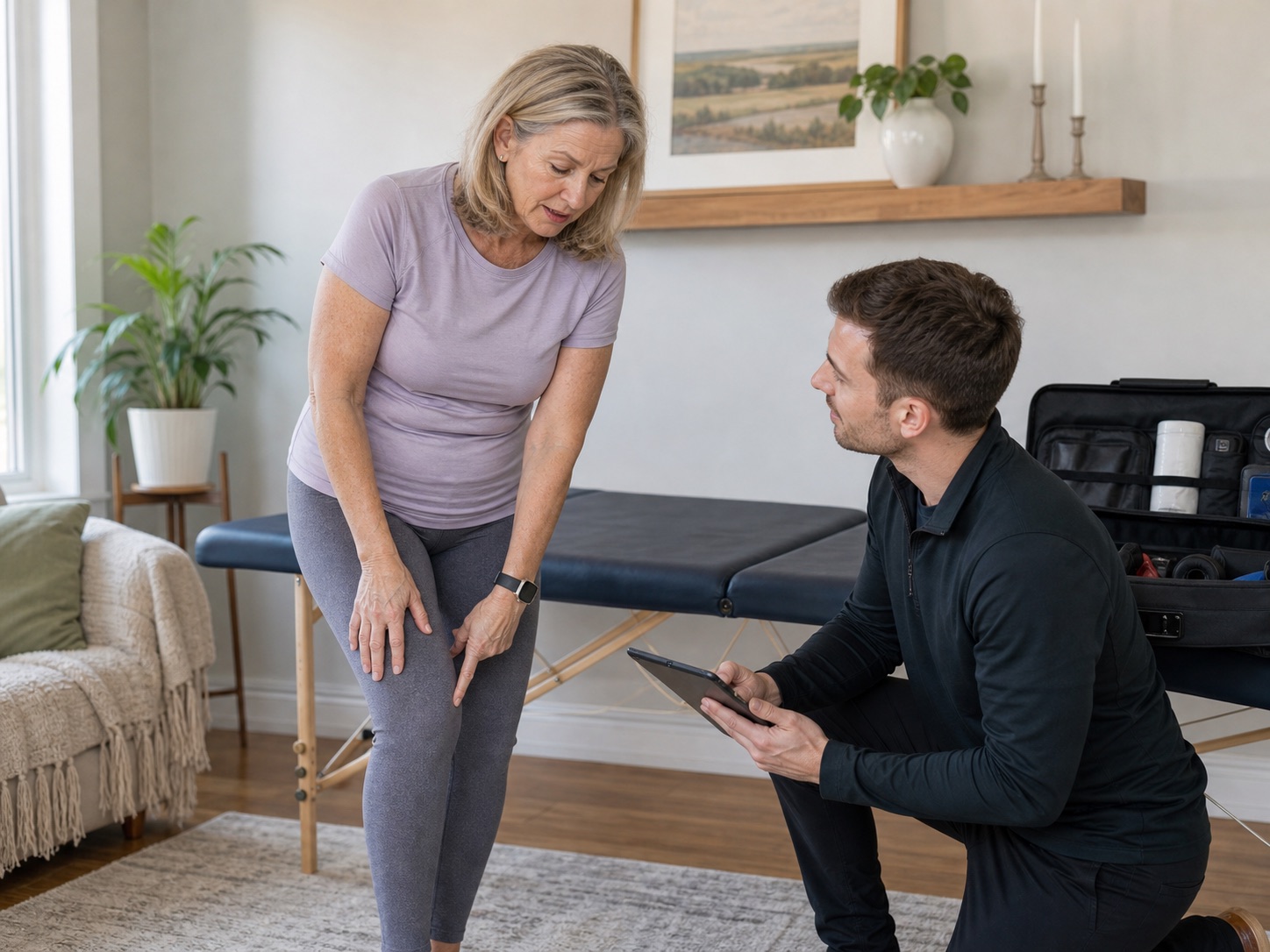
- At arrivalDan brings the equipment, completes a brief intake and reviews the plan with you. Setup is usually about ten minutes; total appointment time depends on the service and number of areas.
- During the serviceThe cold is directed to the selected area. You can ask questions, give feedback and stop the session if anything feels wrong.
- AfterwardDan provides service-specific guidance and answers any follow-up questions. Individual responses vary.
Homes, hotels, gyms, offices, wineries, events and other suitable private locations can be considered. Sonoma and Marin are the primary service areas, with additional North Bay and San Francisco appointments available by request.
Safety and screening
Cold is a real physical stressor, so professional screening and controlled exposure matter. Excessive cooling can injure skin or nerves. Published case reports describe peripheral nerve injuries after inappropriate cold application,5 and the FDA advises extra caution for people with circulation problems or reduced skin sensation.6
Tell Dan about relevant health conditions, skin or sensation changes and anything else that could affect a cold service. If symptoms are severe, unexplained, worsening or persistent—or if you have questions involving pregnancy, medication, circulation or a diagnosed condition—start with an appropriately licensed healthcare professional.
A responsible provider should explain the method, expected sensation, stop procedure and realistic limits before treatment begins.
Deciding whether it fits your goals
- You want a focused cold service for one or more selected areas
- You understand that comfort and recovery responses vary
- Mobile convenience matters to you
- Your symptoms are new, severe or unexplained
- You have impaired circulation or sensation
- You need diagnosis, treatment or return-to-activity advice
The best next step is a simple conversation. Tell Dan what you are considering and where you are located. He can explain the available service, confirm pricing and help you decide whether an appointment makes sense.
Sources & context
Research behind this guide
- Algafly & George (2007), nerve conduction, pain threshold and pain tolerance (opens in a new tab)Controlled cooling study
- Khoshnevis et al. (2014), blood-flow response across localized cooling devices (opens in a new tab)Device physiology study
- Wu et al. (2026), cryotherapy methods and post-exercise recovery (opens in a new tab)Systematic review and network meta-analysis
- Costello et al. (2015), whole-body cryotherapy after exercise (opens in a new tab)Cochrane systematic review
- Malone et al. (1992), cold-related peripheral nerve injury case series (opens in a new tab)Safety case series
- FDA, cold-therapy device safety guidance (opens in a new tab)Government safety guidance
The studies above involve different cooling methods, devices and protocols. Each claim is limited to what its cited source can reasonably support; none is treated as proof of a guaranteed individual result.