The short version
What to know
- Some cold methods may help perceived soreness for some people in the short term.
- Research does not show a universal improvement in recovery or performance.
- Sleep, food, hydration, load management, and professional care still matter.
The useful answer is not yes or no
Cold is popular after hard training because it can change sensation and may make some people feel less sore. Reviews have found possible short-term effects on perceived soreness, but the results vary with timing, temperature, exposure method, and the outcome being measured.12
Feeling better is a real experience, but it is not the same as faster tissue repair or improved performance.
The method matters
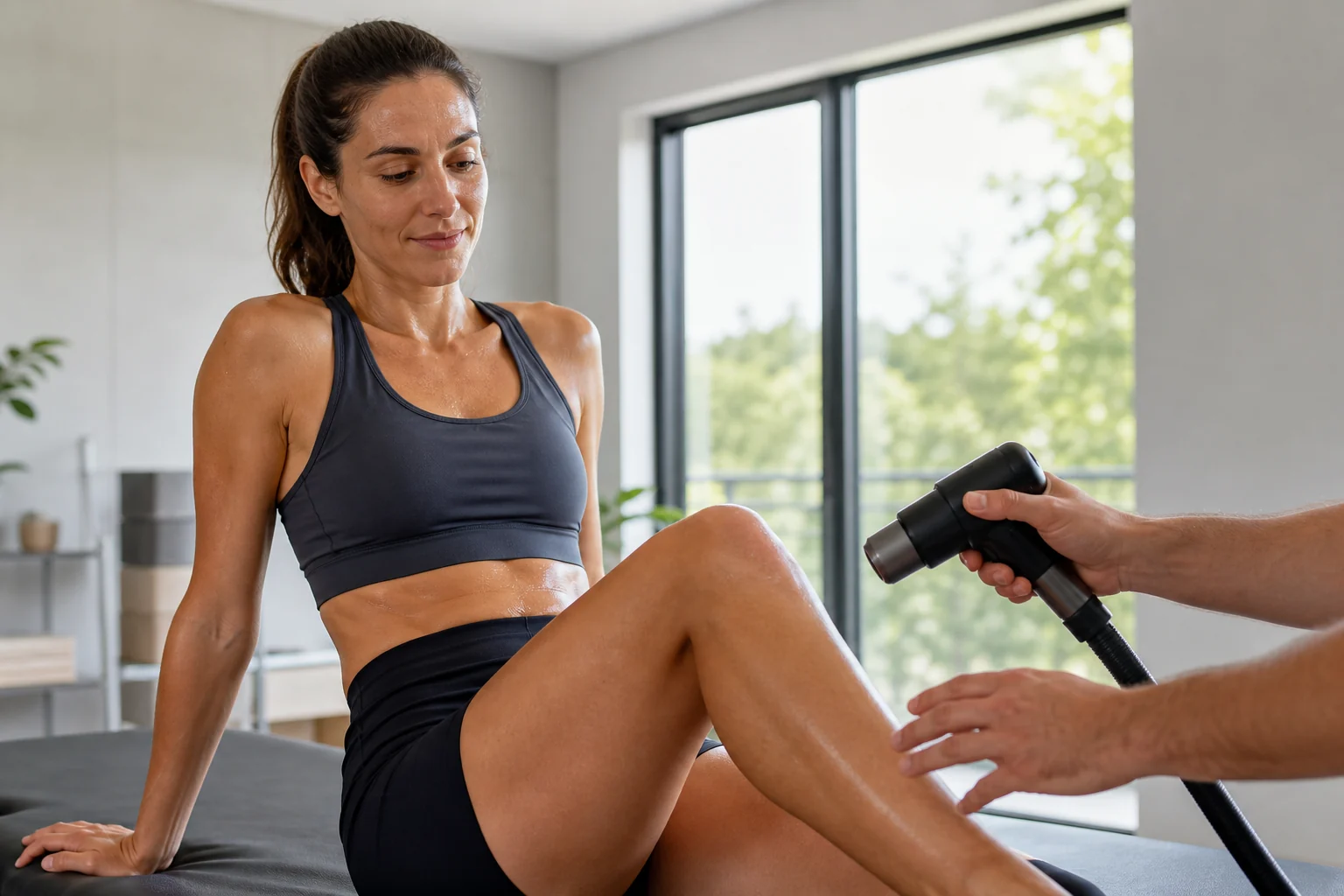
Most exercise-recovery studies involve cold-water immersion, ice, or whole-body cryotherapy. A mobile localized service exposes a smaller selected area and should not inherit claims from those methods automatically. Even whole-body air exposure and cold-water immersion create different temperature responses.3
Put cold in the right place
A localized session can be considered one optional part of a broader recovery routine. It does not replace sleep, adequate food and fluids, sensible training progression, or evaluation of a possible injury. Your coach or clinician's plan comes first when one exists.
Know when soreness is not routine
Stop treating a symptom as ordinary post-workout soreness when it is severe, unusual, worsening, associated with major swelling or loss of function, or not improving as expected. Cold can temporarily change pain perception without identifying the cause.
Questions worth asking
- What exact cooling method will be used?
- Is the goal comfort, soreness management, or something that needs medical evaluation?
- What result is realistic, and how long might it last?
- Could reduced sensation make it harder to notice a warning sign?
Sources & context
Where this guide comes from
- Allan et al. (2022), overview of cooling modalities and recovery (opens in a new tab)Source 1
- Costello et al. (2015), Cochrane review of whole-body cryotherapy (opens in a new tab)Source 2
- Costello et al. (2012), temperature responses to whole-body cryotherapy and cold-water immersion (opens in a new tab)Source 3
The cited research may involve different cooling methods, populations, and protocols. The surrounding text explains what each source can—and cannot—support.